
9 Proven Ways to Make Your Website Appear in AI Search Results
Date : 29 May 2026
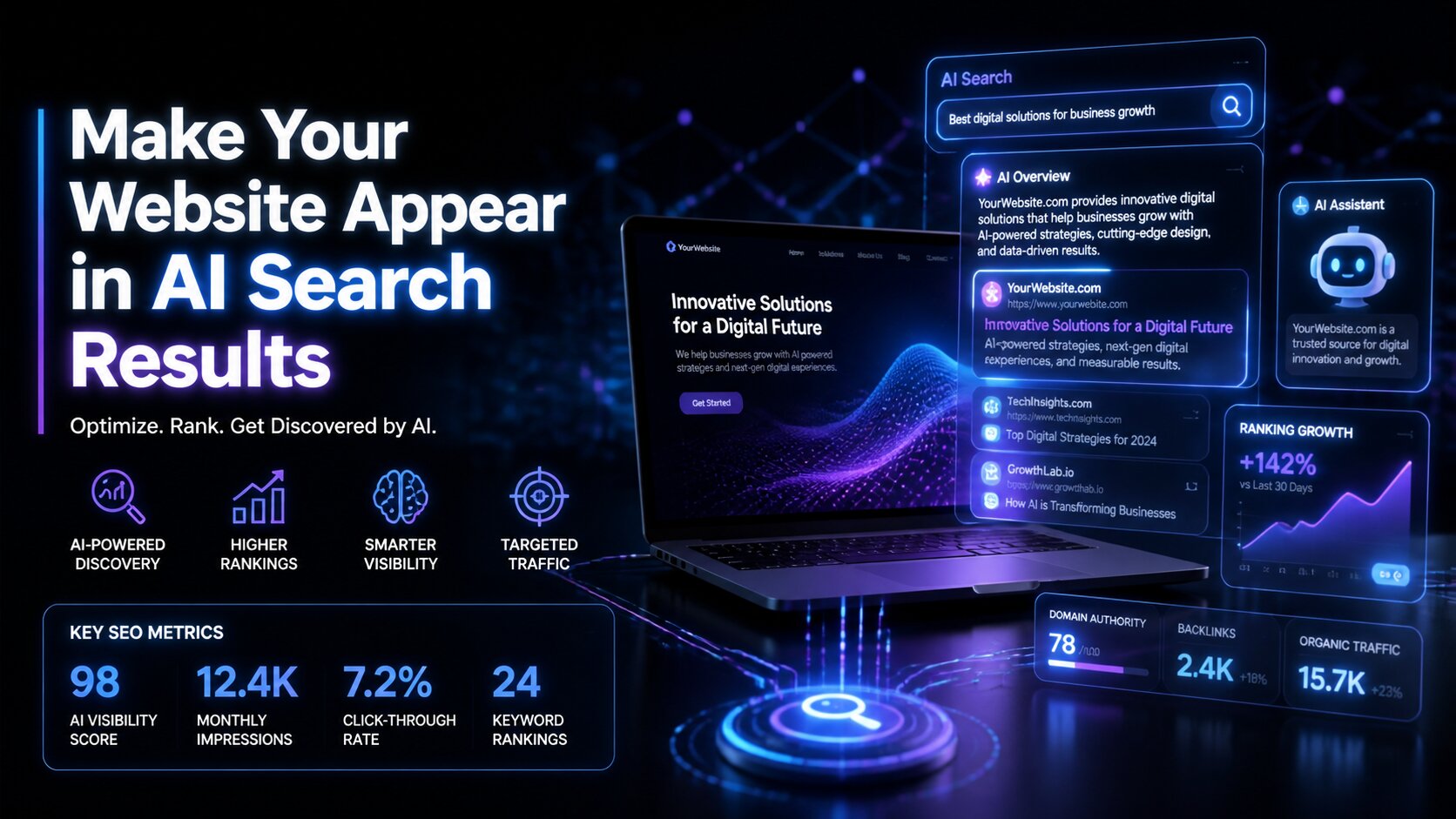
Search behavior is changing rapidly. Instead of browsing through multiple links, users are increasingly turning to AI-powered search engines and tools like ChatGPT, Google AI Overviews, Gemini, and Perplexity AI to get direct answers.
This shift is changing the way businesses approach SEO and online visibility. Traditional ranking strategies still matter, but websites now also need to be optimized for AI-powered search engines that analyze content contextually rather than relying only on keywords.
If you are wondering how to optimize your website for AI search, the answer lies in creating high-quality content, improving technical SEO, and building trust online. Businesses that adapt early to AI search optimization are more likely to improve organic traffic, search visibility, and long-term digital growth.
Here are nine practical strategies that can help your website appear in AI-generated search results.
1. Create Helpful Content That Matches User Intent
One of the most effective AI SEO strategies is creating content that genuinely helps users.
AI search engines are designed to understand user search intent. They prioritize pages that clearly answer questions, solve problems, or explain topics in a useful way.
For example, a guide like:
“How to Improve Website Visibility Online”
is more likely to perform well than overly promotional content because it addresses a real search query.
Helpful content formats include:
- How-to guides
- Tutorials
- Educational blogs
- Industry insights
- Step-by-step articles
- FAQs
When writing content, focus on what users actually want to learn instead of only targeting rankings.
User-focused content naturally performs better across both traditional SEO and AI-generated answers.
2. Use Natural Keywords Instead of Keyword Stuffing
This means you no longer need to repeat the same keyword excessively throughout an article. Instead, use related terms naturally within the content.
For example, if your primary keyword is:
“AI search optimization”
You can also include related phrases such as:
- website optimization
- search visibility strategies
- AI-powered search engines
- organic search growth
- content relevance
- digital marketing strategy
Using LSI keywords and semantic variations makes the content feel more natural while helping AI systems understand the topic more clearly.
The goal is to write for humans first while maintaining proper keyword relevance.
This means you no longer need to repeat the same keyword excessively throughout an article. Instead, use related terms naturally within the content.
For example, if your primary keyword is:
“AI search optimization”You can also include related phrases such as:
- website optimization
- search visibility strategies
- AI-powered search engines
- organic search growth
- content relevance
- digital marketing strategy
Using LSI keywords and semantic variations makes the content feel more natural while helping AI systems understand the topic more clearly.
The goal is to write for humans first while maintaining proper keyword relevance.
3. Improve Technical SEO and Website Performance
Technical SEO continues to play a major role in AI search visibility.
Even high-quality content may struggle if your website has performance issues or poor crawlability.
Some important technical SEO factors include:
- Mobile-friendly website design
- Fast loading pages
- HTTPS security
- XML sitemaps
- Clean URL structure
- Proper internal linking
- Optimized Core Web Vitals
AI systems prefer websites that provide a smooth and fast user experience.
Improving website performance not only supports better search rankings but also helps reduce bounce rates and improve user engagement metrics.
4. Optimize Your Website Structure
Website structure affects how easily AI crawlers can understand your content.
A well-organized website makes navigation easier for both users and search engines.
Best practices include:
- Using clear headings and subheadings
- Organizing pages into categories
- Adding internal links between related pages
- Keeping URLs simple and descriptive
-
For example:
Good URL:
yourwebsite.com/ai-search-optimization-guidePoor URL:
yourwebsite.com/page?id=2987Structured websites improve website crawlability and help search engines identify important content more effectively.
4. Optimize Your Website Structure
Website structure affects how easily AI crawlers can understand your content.
A well-organized website makes navigation easier for both users and search engines.
Best practices include:
- Using clear headings and subheadings
- Organizing pages into categories
- Adding internal links between related pages
- Keeping URLs simple and descriptive
For example:
yourwebsite.com/ai-search-optimization-guide
yourwebsite.com/page?id=2987
5. Add FAQ Sections and Conversational Content
AI-powered search tools are built around conversational queries.
Users now search with complete questions such as:
- “How do AI search engines work?”
- “How can I rank in Google AI Overviews??”
- “What are the best SEO strategies for AI search engines?”
Adding FAQ sections helps your content align with these conversational search queries.
It also increases the chances of appearing in:
- Featured snippets
- Voice search results
- AI-generated summaries
Keep answers short, clear, and direct for better readability and improved search experience.
6. Build Topical Authority Around Your Expertise
AI search engines are more likely to trust websites that consistently publish high-quality content around a specific subject.
For example, businesses in software development or digital marketing should regularly create content related to:
- AI solutions
- Web development
- Technical SEO
- SaaS platforms
- Mobile applications
- Website optimization
- Search engine optimization
- Digital transformation
Publishing related content over time helps build topical authority and strengthens your website's authority within your niche.
This approach improves long-term organic search growth and visibility in AI-generated answers.
7. Focus on Trust and Credibility
Trust signals are becoming increasingly important in AI SEO. AI systems prefer websites that appear reliable, accurate, and authoritative. Strengthening trust factors helps improve your visibility and credibility in AI-powered search results.
Ways to improve website trust include:
- Publishing updated and relevant content regularly
- Using secure HTTPS connections
- Adding clear author information and credentials
- Displaying testimonials, reviews, and client feedback
- Earning backlinks from trusted and authoritative websites
- Maintaining consistent branding across all digital channels
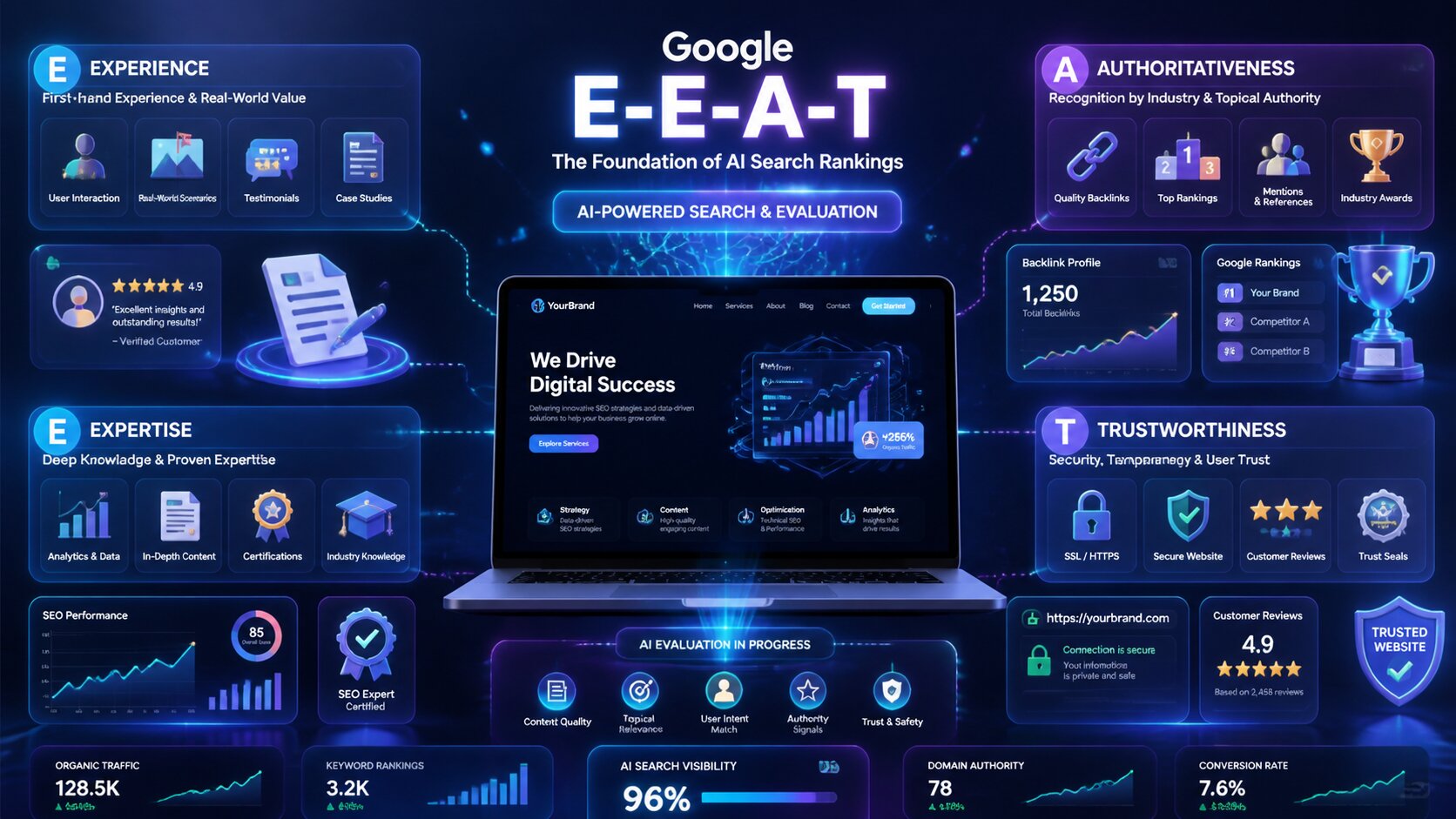
Google’s E-E-A-T framework — Experience, Expertise, Authoritativeness, and Trustworthiness — plays a vital role in modern search engine rankings. Strong trust signals increase the likelihood of your content being recognized, cited, and referenced by AI-powe
8. Keep Updating Existing Content
Many businesses publish blogs once and never update them again. Over time, outdated content can lose relevance, rankings, and organic traffic. AI search systems prioritize fresh, accurate, and up-to-date information when selecting content to reference and recommend.
Regularly review and improve the following elements:
- Statistics and data points
- Industry trends and market insights
- Screenshots and visual content
- Internal links and navigation structure
- Meta titles and meta descriptions
- Keyword targeting and search intent alignment
Content freshness is an important ranking factor because it signals that your website remains active, relevant, and trustworthy. Regular updates help improve user experience and increase the likelihood of your content appearing in AI-powered search results.
Updating existing pages can often improve rankings faster than publishing completely new content.
9. Prioritize User Experience Over Rankings
Search engines are becoming increasingly focused on user behavior and engagement.
Websites that provide a better user experience are more likely to perform well in both traditional search results and AI-generated search responses.
Simple improvements include:
- Using shorter paragraphs for better readability
- Improving content structure and formatting
- Ensuring full mobile responsiveness
- Providing clear and intuitive navigation
- Adding strong and relevant call-to-action buttons
- Maintaining clean and user-friendly page layouts
AI systems often evaluate engagement signals such as:
- Bounce rate
- Time on page
- Navigation patterns
- Content interaction
A positive user experience supports stronger search visibility over time.
Why AI Search Optimization Matters
AI-driven search is transforming how people discover information online. Businesses that rely only on traditional SEO strategies may struggle to maintain visibility as search behavior continues to evolve.
The future of SEO is no longer just about achieving higher rankings on search engines. It is about becoming a trusted source of information that AI systems can understand, validate, and recommend to users.
Websites that focus on the following areas will be better positioned for long-term online growth:
- Helpful and user-focused content
- Semantic SEO and content relevance
- Technical website optimization
- Excellent user experience
- Strong topical authority
- Trust signals and credibility
By investing in these key SEO foundations, businesses can improve their chances of appearing in both traditional search results and AI-powered search experiences, helping them stay competitive in the evolving digital landscape.
About MindSpace Software Technologies
MindSpace Software Technologies is a Navi Mumbai-based company specializing in software development, web development, mobile applications, and digital marketing solutions. The company works with businesses across multiple industries to build scalable and user-friendly digital platforms. Along with technology services, MindSpace also focuses on website optimization, SEO strategies, and AI-ready digital solutions that help businesses improve their online visibility and long-term growth.
The future of SEO is no longer just about achieving higher rankings on search engines. It is about becoming a trusted source of information that AI systems can understand, validate, and recommend to users.
Websites that focus on the following areas will be better positioned for long-term online growth:
- Helpful and user-focused content
- Semantic SEO and content relevance
- Technical website optimization
- Excellent user experience
- Strong topical authority
- Trust signals and credibility
By investing in these key SEO foundations, businesses can improve their chances of appearing in both traditional search results and AI-powered search experiences, helping them stay competitive in the evolving digital landscape.
FAQs
Q1: What is AI search optimization?
A1: AI search optimization is the process of improving a website so AI-powered search engines can better understand, trust, and display its content.
Q2: How do I make my website appear in AI search results?
A2: You can improve AI search visibility by focusing on technical SEO, helpful content, structured website architecture, semantic SEO, and strong user experience.
Q3: Does traditional SEO still matter in 2026?
A3: Yes. Traditional SEO remains important, but AI-powered search engines also focus heavily on contextual relevance, trust signals, and content quality.
Q4: What type of content works best for AI search?
A4: Educational, informative, and user-focused content tends to perform best in AI-generated search results.